An oral liquid enquiry needs more detail than a product name and bottle size. Oral liquid manufacturing discussions should connect the formulation, strength basis, dosage form, container and intended market. For procurement teams, a precise brief reduces the chance of comparing different products under similar descriptions.
Define the oral liquid manufacturing requirement
Identify whether the requested product is a solution, syrup, suspension or another specified presentation. State the composition and the basis on which the strength is expressed. Use the approved product reference where available and ask the supplier to flag any difference in its proposed offer.
These terms should not be swapped simply to match a preferred catalogue description. If the formulation is still under development, identify the open technical questions and the team responsible for resolving them.
Describe the complete bottle presentation
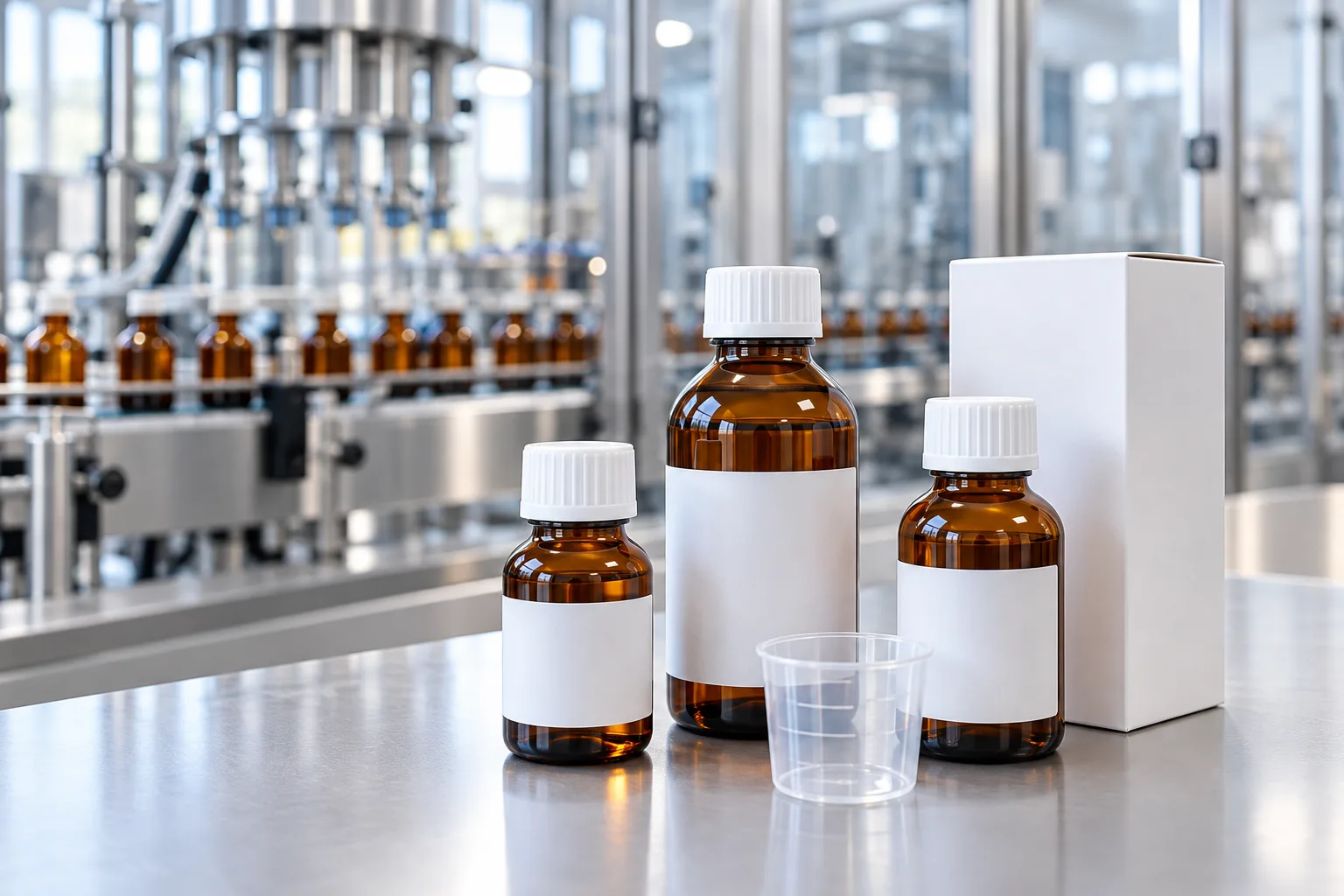
Record the proposed fill volume, container material, closure and pack count. Ask which container-closure configuration the supplier proposes for the product and which product-specific evidence supports it. A photograph of an amber bottle does not fully define its material, dimensions or closure system.
Where a measuring component is part of the presentation, specify that requirement and ask the technical team to review it. The commercial brief should identify whether that component is included in the quoted finished pack.
| Component | Sourcing question |
|---|---|
| Formulation | What exact composition and strength basis are proposed? |
| Bottle | What material, fill volume and configuration are in scope? |
| Closure | Which closure specification is being offered? |
| Measuring component | Is one required and included in the pack? |
| Outer pack | What carton and shipping configuration applies? |
Connect packaging with stability and storage
WHO's regulatory standards overview links packaging and storage considerations with product stability. Ask your quality and regulatory teams to assess the supported configuration, storage statements and shelf-life information for the intended product.
A buyer should not select a storage condition from a generic rule for all oral liquids. Similarly, a preferred shelf life is a commercial request until the appropriate product-specific evidence and approvals support it.
Clarify manufacturing, testing and document scope
Ask which site and activities are proposed, what information is available for supplier assessment and what documents accompany delivery. Route technical questions to the relevant specialists. Confirm how the supplier will identify the exact product and batch in shipment paperwork.
For a sample supplied during sourcing, record what the sample is intended to demonstrate. Packaging review, appearance review and commercial-batch assessment are different purposes. A presentation sample should not be treated as confirmation of a future batch's quality.
Plan quantities around bottles and finished packs
State the number of bottles, bottles per carton and finished saleable quantity. Ask whether packaging minimums differ from manufacturing minimums. If the order involves printed labels and cartons, clarify how unused components are stored and handled after an artwork change.
- Agree the precise pack basis in the quotation.
- Identify artwork and material approval milestones.
- Request a schedule including testing and release.
- Confirm handling and receiving instructions before dispatch.
Send a focused oral-liquid enquiry
Explore Flemming Pharma's syrup and oral suspension categories. Use the packaging selection guide to organise your questions, then share the formulation, strength basis, bottle size, quantity and destination market for a specific sourcing discussion.